Search



Rectified Tiles vs. Pressed Edge Tiles: Which One Should You Choose?
Posted:
January 01, 2026
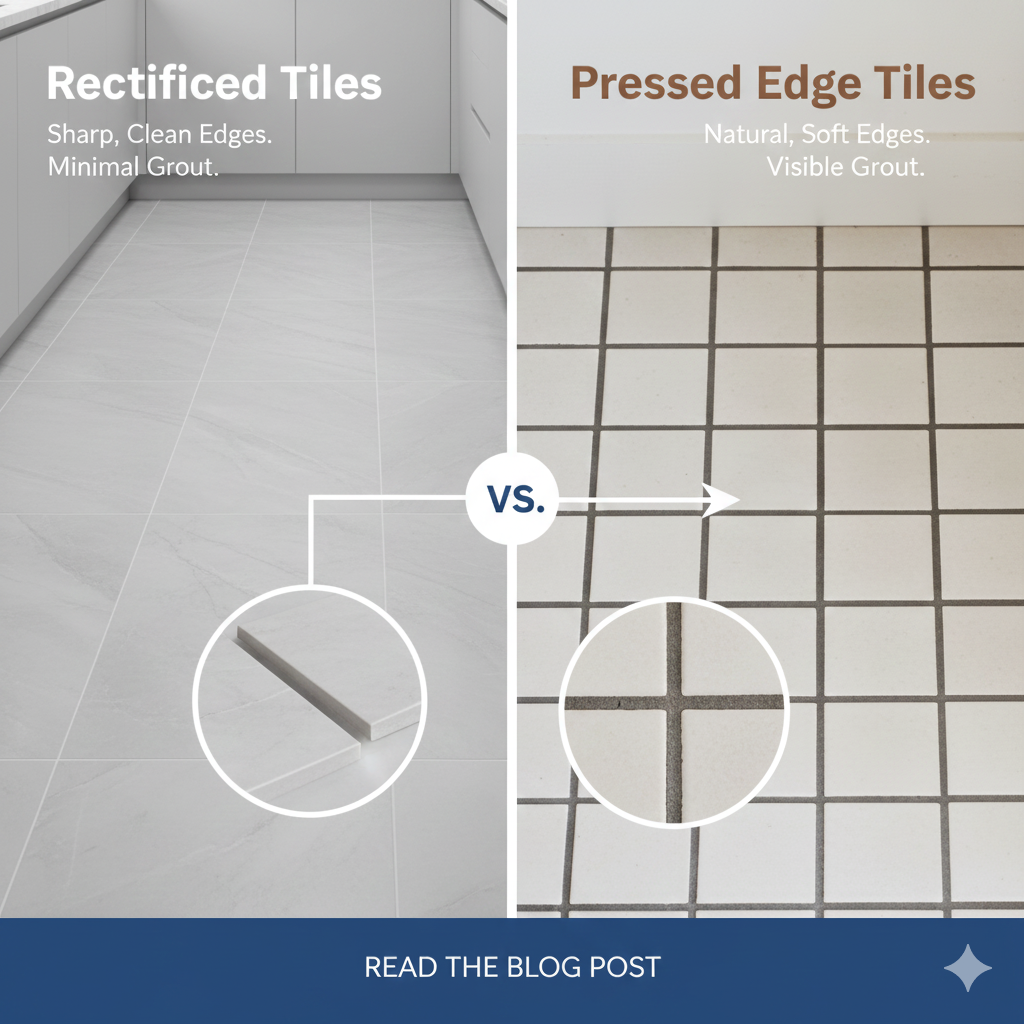
Rectified vs. Pressed Edge Tiles: Which One Should You Choose?
When shopping for tiles, most people focus on the color, size, and texture. However, there is one technical detail that can completely change the look of your floor or wall: the edge finish.
If you’ve heard the terms "Edge-Grinded" (Rectified) and "Non-Edge-Grinded" (Pressed) and wondered what the difference is, this guide is for you.
1. Rectified Tiles / Edge-Grinded Tiles: The Clean, Modern Look
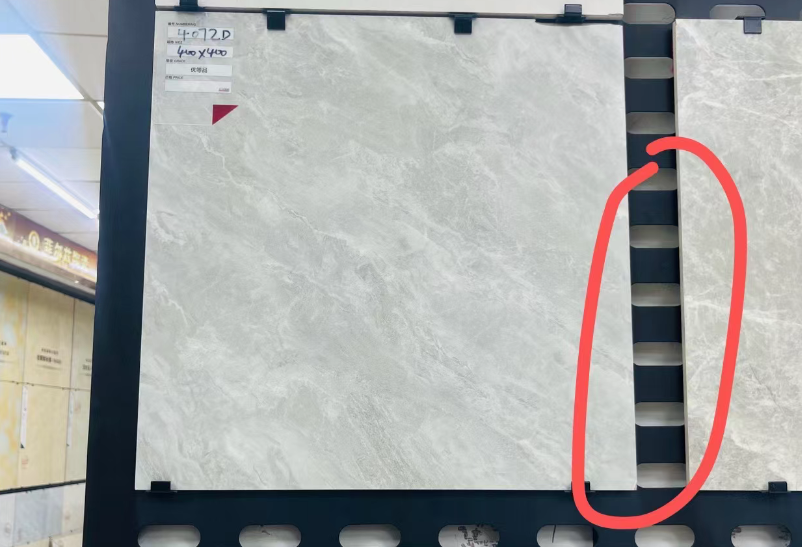
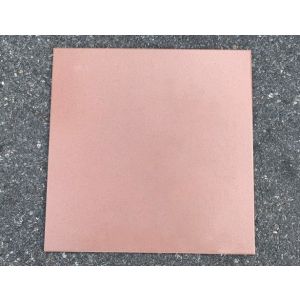
As seen in the image above, edge-grinded tiles undergo a mechanical process where the sides are precisely cut or ground down after firing.
-
The Appearance: The edges are perfectly straight and meet at a sharp $90^\circ$ angle.
-
The Benefit: Because the tiles are uniform in size, you can lay them with extremely thin grout lines (as small as 1.5mm). This creates a seamless, "wallpaper" effect that looks high-end and modern.
-
Best For: Large format tiles, minimalist designs, and areas where you want to minimize the appearance of grout.
2. Pressed Tiles / Non-Edge-Grinded Tiles: The Natural Choice
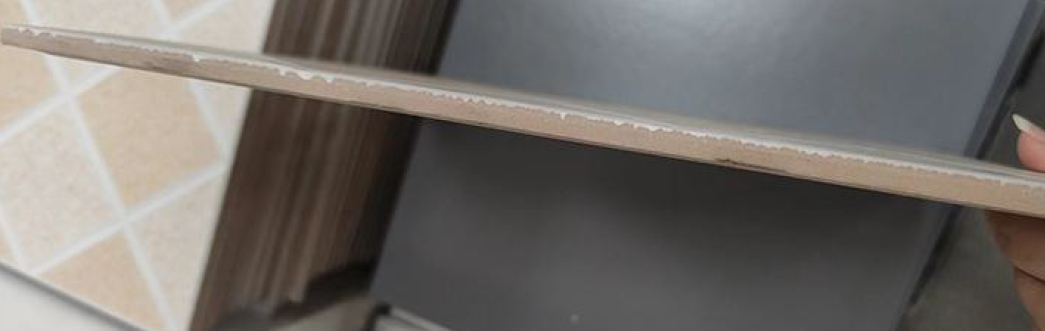
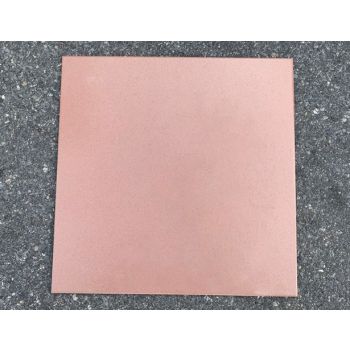
Non-edge-grinded tiles are fired in a mold and left with their natural, slightly uneven edges. As you can see in the close-up, the edges may have slight "waviness" or a soft taper.
-
The Appearance: The edges are slightly rounded and less precise.
-
The Benefit: These tiles offer a more traditional, rustic, or "soft" look.
-
The Grout Factor: Because the edges aren't perfectly straight, you must use wider grout lines (typically 3mm to 5mm) to mask the slight variations between tiles.
-
Best For: Traditional homes, outdoor areas, or when using smaller subway tiles where a "pillowed" edge adds character.
The Cost Factor: Investment vs. Value
When choosing between these two, it is important to consider both the product price and the installation cost:
-
Product Price: Edge-grinded tiles are generally more expensive per square meter. This is because of the extra machinery and labor required to grind the edges to a precise measurement.
-
Installation Cost: Installing rectified (edge-grinded) tiles often costs more in labor. Because the grout lines are so thin, the floor must be perfectly level. Even a tiny height difference (called "lippage") is very noticeable on a sharp-edged tile. Non-edge-grinded tiles are more "forgiving" and faster to install on slightly uneven surfaces.
Pro Tip: Choosing the Right Grout
The grout you choose can either highlight your tile or make it disappear.
-
For Edge-Grinded Tiles: Choose a grout color that perfectly matches the tile. Since the lines are already very thin, a matching color makes the floor look like one solid piece of stone.
-
For Non-Edge-Grinded Tiles: You can afford to use contrasting grout. Since the grout lines are wider by necessity, using a darker grout with a lighter tile (or vice versa) can create a beautiful "grid" pattern that feels classic and intentional.
Summary Comparison Table
| Feature | Edge-Grinded Tiles / Rectified Tiles | Non-Edge-Grinded Tiles / Pressed Tiles |
| Edge Shape | Sharp, 90-degree angles , flat | Slightly rounded, uneven |
| Grout Line | Very thin (1.5mm - 2mm) | Wider (3mm - 5mm+) |
| Price | Higher (Extra processing) | Lower (Standard production) |
| Final Style | Seamless, modern, luxury | Traditional, natural, rustic |
Which is right for you?
If you want your floor to look like a single, continuous sheet of stone with invisible joints, go with Rectified Tiles / Edge-Grinded tiles . However, if you prefer a classic look or are working on a budget where a bit of "character" in the tile shape is welcome, Pressed Tiles /Non-Edge-Grinded tiles are a fantastic and durable choice.
Related Products
-
 Cheapest Tile,Anti-slip Tile,Protruding bullet-shaped Tile,Scratch Resistant Tile,Wear-resistant Tile,Porcelain TileSpecial Price $1.44 Regular Price $2.98
 -
1.44$ / sq. ft. Scratch Resistant Tile,Wear-resistant Tile,Matte Rectified Porcelain Tile,Yellow Tile,Floor Tile for Kitchen and BathroomSpecial Price $1.44 Regular Price $2.98
-
1.44$ / sq. ft. Scratch Resistant Tile,Wear-resistant Tile,Matte Rectified Porcelain Tile,Red Tile,Floor Tile for Kitchen and BathroomSpecial Price $1.44 Regular Price $2.98
Comment(s)